What Hedge Fund COOs actually look for in technology partners
Key insights from the HFM Emerging Managers COO Summit roundtable
“You don’t really know a technology partner until you put pressure on them.” That observation, shared during a roundtable at the HFM Emerging Managers COO Summit, resonated throughout the room.
It captures an essential truth about technology platform selection in the hedge fund industry.
Choosing an OMS or front-to-back platform is a multi-year strategic commitment that becomes embedded in every workflow, every trade, and every compliance check. During the evaluation phase, providers are at their most responsive. But the real test comes later, after the contract is signed, when they must prove themselves during system upgrades, market stress, implementation challenges, and urgent support situations.
Migration from core systems is expensive, disruptive, and complex – which is why the decision matters so much upfront.
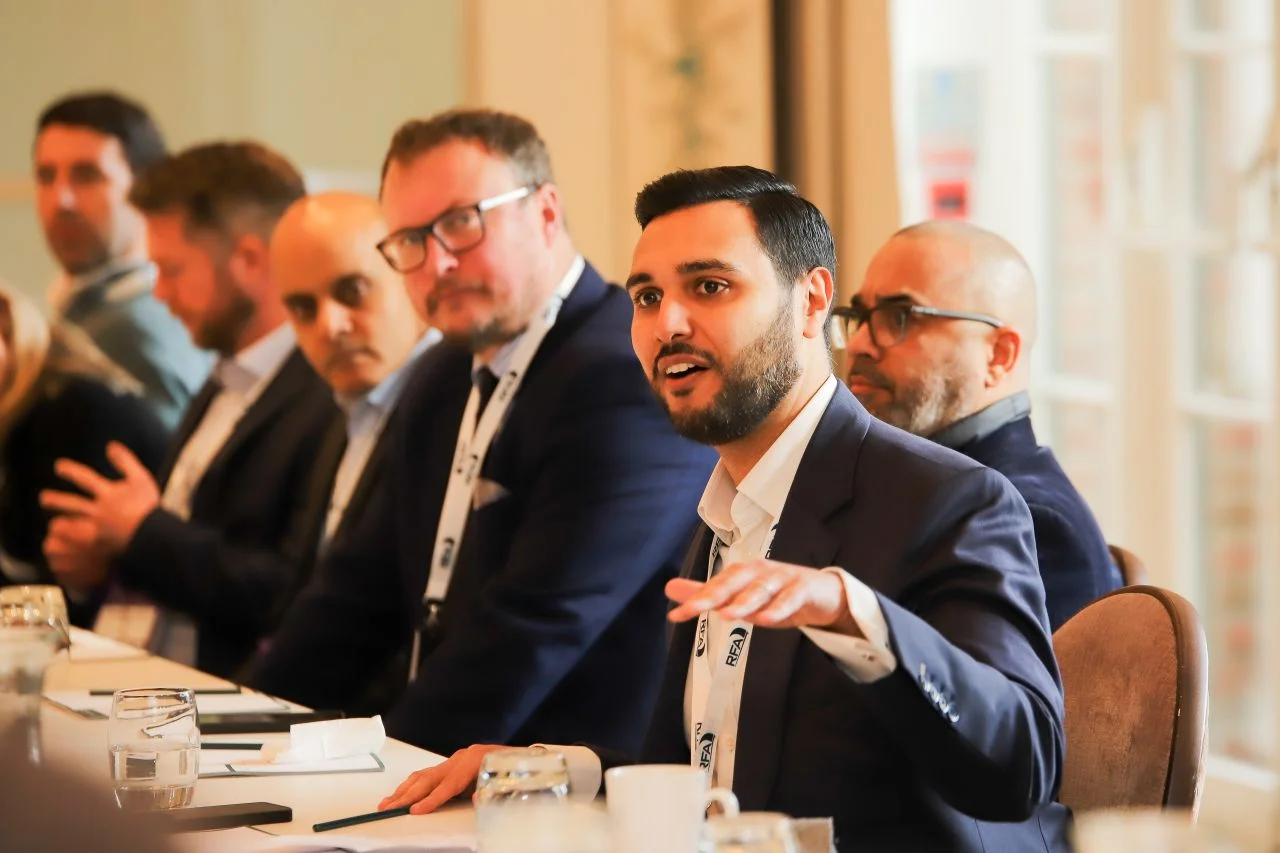
When COOs and operations leaders gathered to discuss platform selection and due diligence, the conversation focused on practical realities: what happens after contracts are signed, how partnerships evolve over time, and what distinguishes effective collaborations from problematic ones. The session featured Basim El-Shoura, Executive Director, Sales at Enfusion by CWAN, alongside Mark Marsdale, COO of Lombardi Capital and Deepak Verma, Head of Operations of Melqart.
Five themes dominated the conversation, each representing a critical evaluation dimension:
1. Proof of concept over product demonstrations
While product demonstrations serve a purpose, they carry limited weight in final decision-making. What matters significantly more is a proof-of-concept using actual fund data, including edge cases, reconciliation scenarios, and SMA allocation requirements. Multiple participants emphasized that technology partners reveal their true capabilities when tested against real operational challenges. Implementation speed, data accuracy under realistic conditions, and partner responsiveness during testing, are the genuine differentiators.
A recurring theme was the hidden cost of fragmented technology stacks, including integration challenges, upgrade complications, reconciliation gaps, and operational blind spots. Participants expressed strong preference for platforms that genuinely support OMS, PMS, compliance, risk, and reporting within a unified environment. Even when this means accepting fewer specialized features, the reduction in operational risk and technical complexity represents significant value. For COOs managing operational risk, simplification often outweighs feature breadth.
3. Scalability must be proven, not promised
Scalability emerged as a critical evaluation criterion, particularly regarding separately managed accounts. The challenge isn’t whether a platform handles SMAs today, but whether it continues to perform effectively as mandates multiply. Allocation logic, compliance rule configuration, risk limit management, and reporting capabilities all need to scale without creating operational bottlenecks or requiring additional headcount. Platforms that treat SMA functionality as secondary create future constraints that can require costly platform changes.
4. Managed services as strategic capability
The discussion distinguished between managed services as cost reduction versus managed services as a strategic scaling tool. The most valuable arrangements involve service teams working directly within the client’s live platform, operating with deep understanding of the fund’s specific requirements, and functioning as a genuine extension of internal operations. This model enables operational scaling without proportional headcount increases, provided the service delivery is substantive rather than transactional.
5. AI requires governance and proven value
Many firms are already deploying AI tactically in areas like reporting automation, research support, and operational efficiency, typically outside core trading systems. This measured approach reflects appropriate caution. Participants expressed interest in AI capabilities but emphasized the necessity of clear governance frameworks, accuracy controls, and audit trails. AI features without demonstrated value, proper governance, and operational safeguards were viewed as potential risks rather than advantages. Substance and proven application matter more than innovation narratives.
Turning Insights into Action
These five themes consistently surfaced throughout the discussion because they represent the factors that determine whether a technology partnership succeeds or becomes a source of operational risk. To help turn these insights into practical evaluation criteria, we’ve developed a decision framework based directly on what matters most to COOs making these decisions.
The Platform Partner Selection Checklist
Use this framework during platform evaluation, RFP processes, or investment committee reviews:
Partnership and long-term viability
Can we realistically operate on this platform for 5–10 years?
Does the provider demonstrate commitment to long-term partnership?
Is the provider financially stable and investing in the product roadmap?
Are service and support teams clearly defined and accessible?
Front-to-back coverage
Does the platform support OMS, PMS, compliance, risk, and reporting?
Can teams work from a single source of truth?
Are key workflows handled natively rather than via customization?
Demonstrated capability
Has the provider completed a proof-of-concept using our actual data?
Were data accuracy, reconciliation, and edge cases tested thoroughly?
Did the provider respond effectively under pressure during testing?
Scalability & SMAs
Can the platform support multiple SMAs without operational friction?
Does it handle allocation logic transparently and consistently?
Will onboarding new mandates require additional headcount?
Managed services (if applicable)
Are services delivered on the same live platform we use?
Does the service team function as an extension of our internal team?
Integration & ecosystem
Does the platform integrate effectively with risk, surveillance, and reporting tools?
Are APIs mature, documented, and actively supported?
Can we extract data easily without provider dependency?
AI & innovation
Does the provider have a clear, credible AI roadmap?
Are AI use cases practical rather than experimental?
Is governance around AI clearly defined?
Operational risk
Are data ownership and extraction rights contractually clear?
Does the platform minimize technical debt over time?
Would migration be manageable if circumstances require it?
Final evaluation
Would I confidently defend this choice to investors and allocators?
Will this choice remain sound as the firm scales?
Do I trust this partner when challenges arise?
What’s Really at Stake
When hedge fund COOs select a technology partner, they’re choosing the operational foundation their firms will rely on for years. Get it right, and the platform scales quietly in the background, enabling growth. Get it wrong, and the technical debt, operational workarounds, and eventual migration become a tax on everything the firm tries to accomplish.
The roundtable discussion made one thing clear: the technology partners that last are the ones who prove their value under pressure, reduce complexity rather than add to it, and remain committed long after the contract is signed. They also evolve with their clients, adapting to new regulatory requirements, market structures, and operational challenges without requiring platform overhauls. Investing time in thorough evaluation upfront avoids investing significantly more time in remediation later.
As global stock markets teeter near all-time highs, the Research Desk sought to investigate what this exceptional, multiyear run for equities has meant for portfolios.
Launching power and gas trading operations often means configuring systems, manually creating complex asset data models, integrating market data, and building workflows before executing a single trade. Setup delays cost time and tie up valuable resources.